
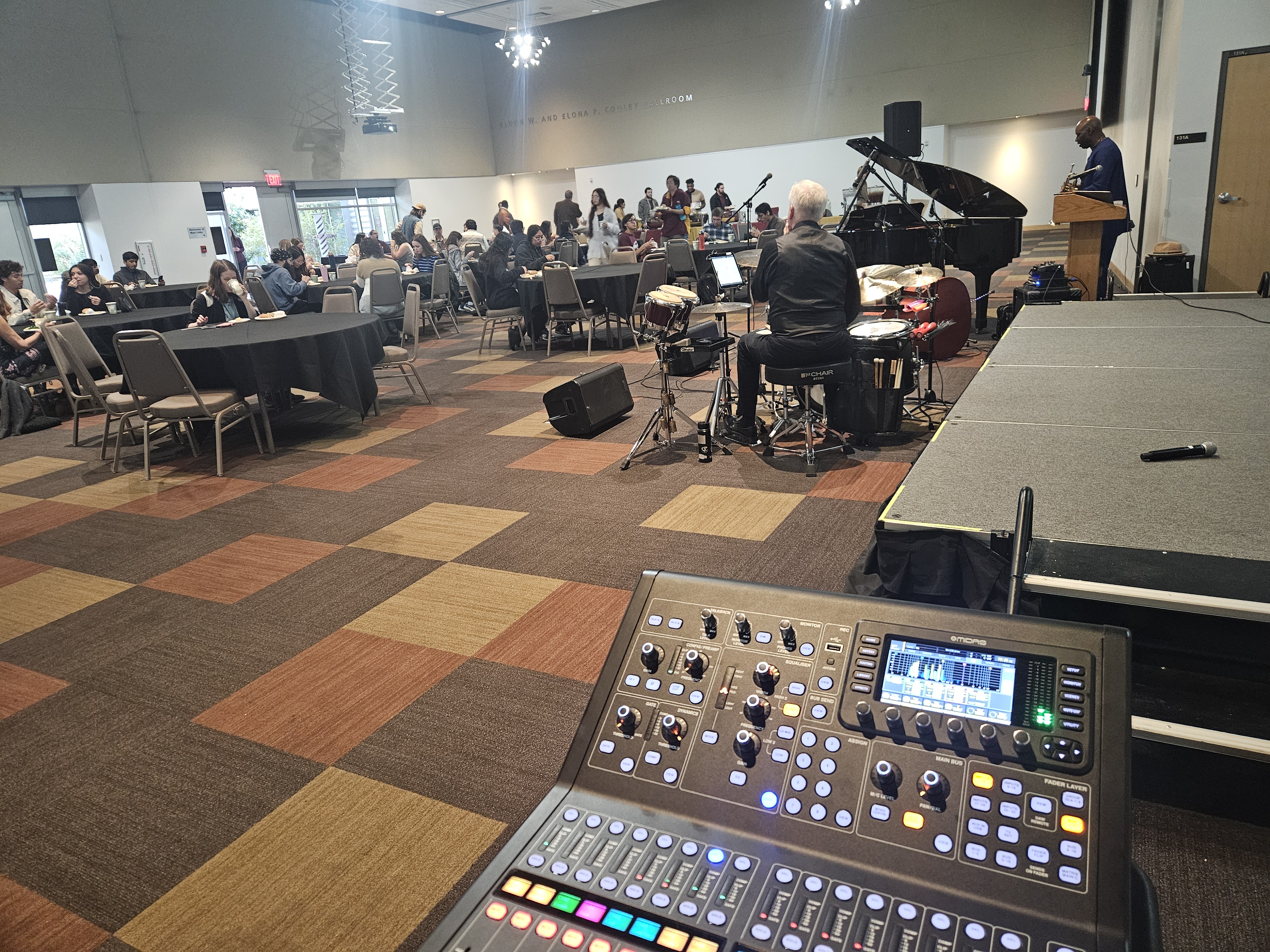
Decide what the music should do
Music can make the start of a networking event feel inviting without asking every guest to stop talking. The goal may be a warm arrival, a short featured performance, or a shift in energy after presentations. Those are different assignments for a musician. Tell the performer and sound team whether conversation remains the center of the room and which moments deserve everyone's attention.
A corporate reception may bring colleagues, clients and speakers together with different expectations. Choose the atmosphere you want rather than assuming one genre fits the word 'corporate.' Share any brand or program considerations, but leave room for the musician to shape a set that works at the chosen volume.
Use the layout to protect conversation
Walk the space before settling on a stage or corner. A performer beside the only bar or check-in desk may create a bottleneck; a speaker pointed at the nearest tables may make introductions difficult. Ask where power, shade or weather cover, safe cable paths and any house sound connections are available. For an outdoor Arizona event, confirm the backup location before show day.
Think about how people will move. Will they gather around a performance, circulate between stations, or sit for part of the program? A musician can adjust a set to those patterns, but only if the event lead shares them. If presentations follow, the sound team should know when the performance must end and which microphone becomes active next.
Make the handoff visible on the schedule
Write down load-in, sound check, guest arrival, performance start, breaks, final song and any spoken announcement. Set a single cue owner. If the keynote begins at a fixed time, give the musician a clear finish signal and allow time for the room to reset. A gentle final song can help guests turn toward the next part of the evening without an abrupt cut.
If music continues after a speech or panel, decide whether the same performer returns or a playlist takes over. Check whether the microphones and speakers can serve both uses without moving gear through guests. The best handoff is usually invisible because the technical conversation happened earlier.
Ask for the right scale
A small acoustic setup and a full band create different footprints, sound levels and staffing needs. Share the guest count range, floor plan, venue rules and expected speaking program before choosing. Ask how the musician handles breaks and whether music should continue between sets. Do not assume the same plan suits a courtyard mixer and a ballroom dinner.
Steady Hands can discuss live music alongside sound, video and production support for the broader event. Start with the audience experience you want and the moments that must be heard. That gives the team a practical way to recommend the performance format and transitions.
Planning something of your own?
Explore Live music ↗